Jia'an · Minesweeper
Use number clues to locate mines. Flag squares, clear neighboring cells and choose from three difficulty levels.
Jia’an City Tycoon · Beginner’s guide
Learn the 28-tile city board, keep cash in reserve, collect rent and compare total assets.
Prepared by:Jia'an Board & Card Games · Updated
Cash pays for purchases, upgrades, rent and expenses; total assets determine the final ranking. Buying property does not make you instantly richer, and property count alone is not enough.
Keep enough cash for rent and taxes. Before starting, choose 2–4 players, 15 or 30 rounds and one of three AI difficulty levels. These are this site’s city-edition rules.
Each player starts with ¥6000. Roll two dice and move their total each turn; doubles do not grant another roll. Pass or reach Start to collect ¥800. On an unowned property or station, buy at the listed price or keep your cash.
Click a tile to check its price and rent before buying. If cash is limited, skip the purchase and open “My Properties” to compare upgrades in your existing districts.
Upgrade at most one of your properties per turn, up to level three. Stations cannot be upgraded. Owning both unmortgaged properties in a district raises its rent by 50%. Each station charges ¥200 times the owner’s number of unmortgaged stations.
For example, Apricot Lane costs ¥600 and has base rent of ¥72 before upgrades. Owning both unmortgaged properties in its district raises rent to ¥108. The first upgrade costs ¥360, bringing district-boosted rent to ¥315.
Mortgaging returns half the property price and half the building costs; rent stops while mortgaged. Redemption costs 60% of the property price. Automatic mortgages compare funds raised with rent lost, including street and station bonuses. Any remaining shortfall causes bankruptcy.
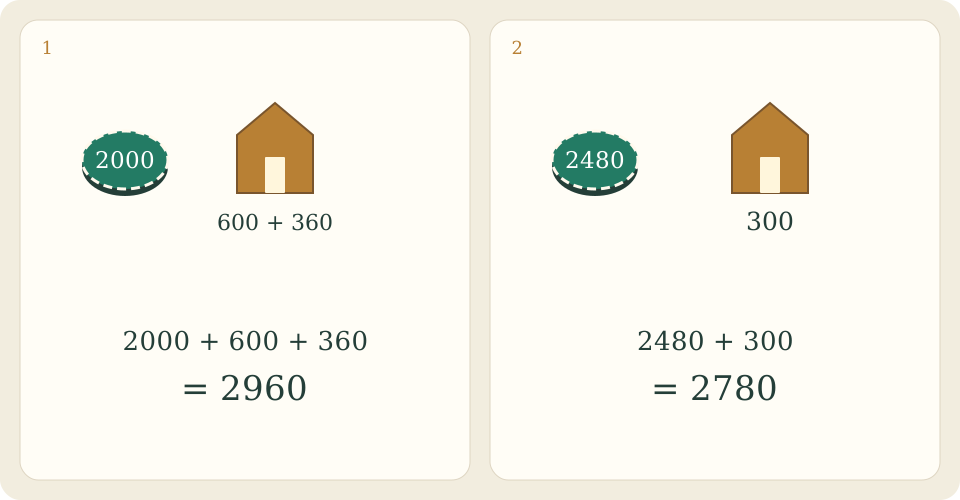
With ¥2000 cash, a property worth ¥600 and a level-one building costing ¥360, total assets are ¥2960. Mortgaging returns ¥480 and removes the building: cash becomes ¥2480 and total assets ¥2780. Cash rises, but the discounted building refund reduces total assets.
The game ends immediately if you go bankrupt, or you win early if all opponents do. Otherwise, after 15 or 30 full rounds, players rank by total assets, with ties allowed.
Total assets = cash + original property prices + original building costs − mortgage principal. Bankrupt players have zero total assets.
Settings offer player count, mode, AI difficulty, language and sound. Sign in to record your highest total assets separately for each configuration.
Ready for something different? Open another game below, or read its rules before you begin.
Use number clues to locate mines. Flag squares, clear neighboring cells and choose from three difficulty levels.
Roll the die to take off, jump between matching colors and fly shortcuts. Bring all four planes home first.