Jia'an · Chinese Checkers
Move or chain jumps across a six-pointed star board. Fill the opposite camp before your opponent.
Jia'an · Jun Qi (Army Chess) · Beginner's Guide
See the counts of all 25 pieces per side and the nine ordinary ranks. Engineer, mine, bomb and flag examples explain why special pieces do not follow a simple rank comparison.
Prepared by:Jia'an Board & Card Games · Updated
Ordinary mobile pieces rank from highest to lowest: Commander-in-Chief, Army Commander, Division Commander, Brigade Commander, Regiment Commander, Battalion Commander, Company Commander, Platoon Commander and Engineer. Higher captures lower; equal ranks remove each other. The lowest-ranked Engineer can still clear Mines and turn on railways.
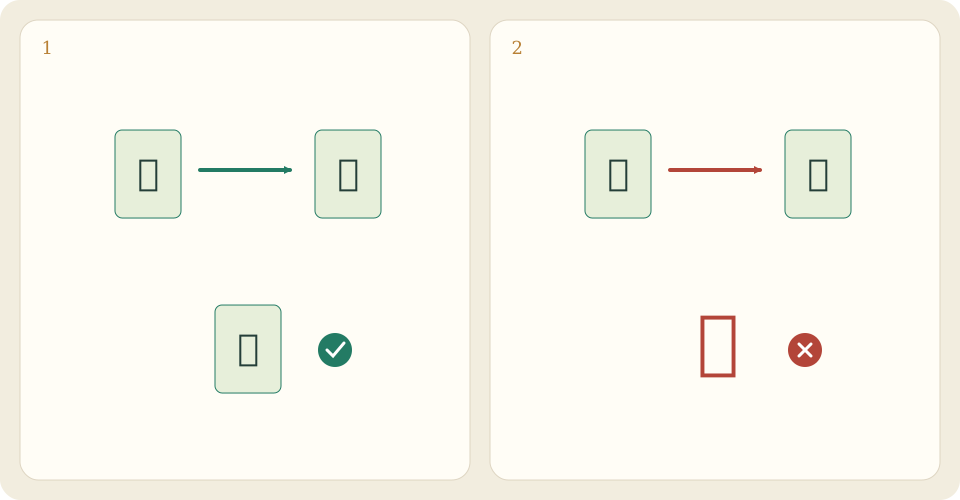
Diagram 1 shows an Engineer attacking a Mine: the Mine is removed and the Engineer survives. If a Commander-in-Chief or another ordinary piece attacks the Mine instead, the attacker is removed and the Mine remains. The highest ordinary rank cannot simply capture a Mine. Mines cannot move by themselves.
Diagram 2 shows a Bomb attacking a Commander-in-Chief: both leave the board. A Bomb hitting a Mine also removes both. The Flag is a separate exception: in this version, any mobile piece that legally reaches the opposing Flag captures it and wins. Bombs also follow flag-capture priority rather than the ordinary combat outcome.
There are nine ordinary ranks, plus three Mines, two Bombs and one Flag per side. Each side has one Commander-in-Chief and Army Commander; two each of Division, Brigade, Regiment and Battalion Commanders; and three each of Company and Platoon Commanders and Engineers. The table separates quantity from combat rules: special pieces are not higher or lower ordinary ranks.
When the Commander-in-Chief leaves the board, this version reveals that side's Flag position, but does not immediately declare a loss for that reason alone. Keep protecting the Flag and checking legal actions. Capturing the opposing Flag, or leaving the opponent without legal actions under the rules, ends the game.
Rank comparison does not replace move legality. You cannot capture friendly pieces or directly attack a protected piece in a camp. First check railway blockers, whether an ordinary piece has a straight route, and whether an Engineer can turn along connected rails. A piece that enters headquarters cannot leave again.
These counts, combat outcomes and special captures describe this site's two-player Junqi. Hidden mode requires reasoning from known information; in flip mode, an unrevealed piece cannot be attacked as a known target. Other versions may treat Bombs, Mines or flipping differently, so check the mode notes before playing.
| Piece | Count per side | Combat rule |
|---|---|---|
| Commander-in-Chief | 1 | Ordinary rank comparison |
| Army Commander | 1 | Ordinary rank comparison |
| Division Commander | 2 | Ordinary rank comparison |
| Brigade Commander | 2 | Ordinary rank comparison |
| Regiment Commander | 2 | Ordinary rank comparison |
| Battalion Commander | 2 | Ordinary rank comparison |
| Company Commander | 3 | Ordinary rank comparison |
| Platoon Commander | 3 | Ordinary rank comparison |
| Engineer | 3 | Ordinary rank; can clear Mines |
| Mine | 3 | Immobile; an Engineer clears it, while a Bomb removes both |
| Bomb | 2 | Usually mutual removal; flag capture takes priority here |
| Flag | 1 | Losing it to a legal capture loses the game |
Ready for something different? Open another game below, or read its rules before you begin.
Move or chain jumps across a six-pointed star board. Fill the opposite camp before your opponent.
Take turns placing X and O on a 3×3 board. Make a row, column or diagonal of three to win.
Bracket and flip opposing discs in eight directions. Choose classic 8×8 or quick 6×6, against the computer or a friend.